


Safari On Foot and Lakeside Decompression: South Luangwa to Lake Malawi
By Olalekan Apanisile · July 2026

The guide stops and crouches in one motion. The track is fresh. Pressed into the dust at the edge of the ebony grove not more than twenty minutes ago. It is early, the valley floor still cool, and the light comes in low and flat from the east. He reads the print, stands, and says nothing for a moment. Then he adjusts direction and moves forward. On a walking safari in South Luangwa, this is where the experience starts.
Trip Snapshot
Region: South Luangwa, Zambia; Lake Malawi, Malawi
Ideal Duration: 9+ days
Best Season: May to October; July is peak for wildlife density
Starting Point: Mfuwe (South Luangwa)
This journey is part of The Occasionist Studio, our curated travel discovery platform that connects travellers with exceptional journeys and trusted destination experts.
Explore the full trip here.
The Valley Floor in Dry Season

South Luangwa's dry season strips the landscape back. By July, the Luangwa River has dropped below its banks, exposing broad sandbanks that elephant, hippo, and wild dogs use as corridors. The trees stand near-bare. The grass is short and tawny. Animals that would have been concealed in May behind green vegetation are now visible from distance, and the tracks they leave in the dust are clear enough to follow.
The valley holds one of Africa's highest densities of leopard. Their eyes appear in the canopy on the night drives, then settle back into darkness. Lions rest in open shade along the river. Giraffe browse the upper branches. The wildlife is unhurried, because on foot you carry no engine noise and no raised platform. You arrive at the same level as everything else.
Walking safaris were invented here. Norman Carr led the first guided walks in South Luangwa in the 1950s, and the guides who work these tracks now carry that tradition specifically. A guide reads the morning before the first animal appears: the direction of a beetle's travel, the way grass has been pressed where something rested in the night, the faint sulphur smell from a hippo pod. The experience goes beyond the sighting. It is in what the sighting costs you first.
Lake Malawi: The Other Half

Some hours east and two days later, the journey shifts in texture entirely. Lake Malawi is one of the great Rift Valley lakes: over 570 kilometres long, warm enough year-round for swimming, and home to hundreds of endemic cichlid species found nowhere else on Earth. In July, the same dry season that concentrates wildlife in the valley keeps the lake clear, calm, and reliably open.
The contrast is deliberate and restorative. Where the walking safari demands sustained attention, the lake asks only that you slow down. Kayak quiet coves in the morning. Snorkel over submerged granite boulders where cichlids move in numbers that still surprise. Sail at dusk on a traditional dhow, the water going still, the far shore of Mozambique a low line on the horizon. The energy of the bush does not disappear at the lake. It settles into something that functions as a specific kind of rest.
Where You Stay
In South Luangwa, the camps sit directly in the wilderness. Some are permanent tented structures on the river bank with decks above the sandbanks; others are dry-season bushcamps that exist only in the cool months, close when the rains arrive, and leave no trace. There is no lighting that competes with the stars. You sleep in the sound of the valley.
On Lake Malawi, the lodges are different in character: barefoot, low-built, made from local materials, set on or directly above the water. Boats rest on the beach. The architecture makes no claims beyond placement. You are always near the water, always aware of the light moving across it, always in a position to move between swimming and stillness without deciding which one you meant to choose.
How the Journey Unfolds
The first days in South Luangwa reset the body clock. Early starts on foot before the heat builds, back in camp by late morning, long quiet afternoons along the river, late drives that return under stars. You are tired by dinner in a way that has nothing to do with jet lag.
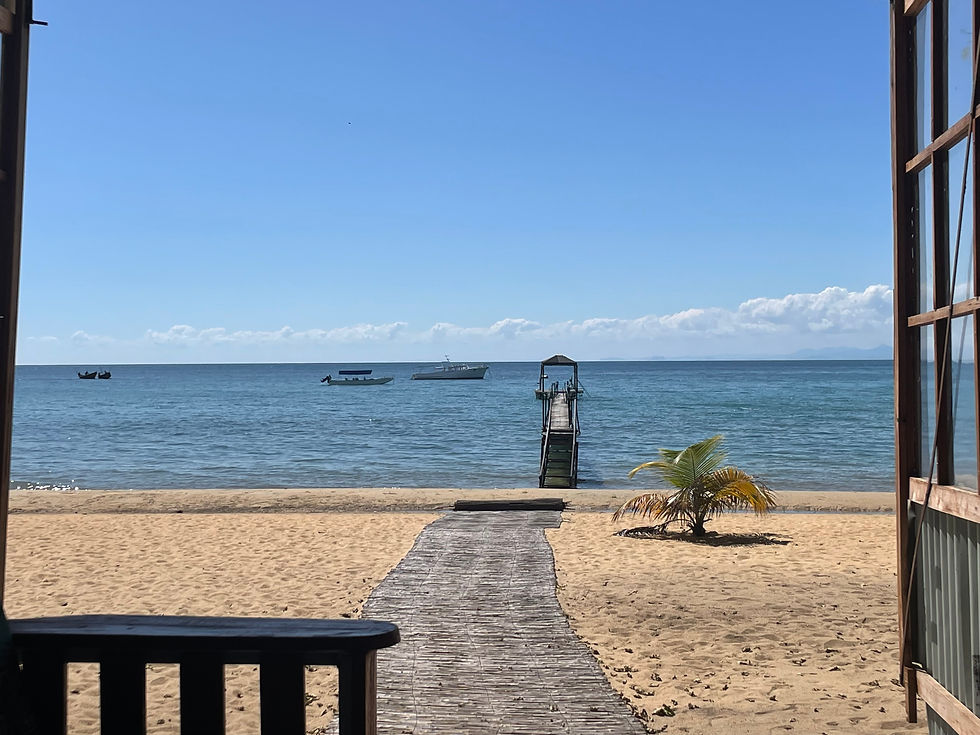
By the third day, the eyes have adjusted. You begin to notice what you missed at the start. Then the journey moves you to the lake, and the pace changes once more: longer mornings, slower afternoons, an ease the bush had not quite allowed. Departure from Lake Malawi happens in stages: a final swim, breakfast on the water, a long look at the lake before the car arrives. It is the right way to end a journey built around two kinds of attention.
The Occasionist Lens
This journey suits travellers who understand that safari covers a wide range of experiences. What it does not suit is someone who wants a highlights tour: multiple reserves, a rapid accumulation of sightings, a compressed return. This is slower and more specific.
South Luangwa is not the most visited safari destination in southern Africa. That works in its favour. The camps are smaller and more remote than those in more heavily marketed reserves, and the walking tradition that developed here has had decades to deepen. The guides are good in a particular sense: expert in this landscape, in this valley, in the behaviour of these specific animals in July.
The Lake Malawi half adds something a wildlife-only itinerary cannot give: a second country, a second register of attention, and a recovery that means you arrive home having actually rested.
Planning This Journey
July sits at the centre of South Luangwa's dry season and is among the strongest months for wildlife. The river is low, vegetation is sparse, and animals concentrate along the water. Valley nights can drop sharply in temperature. Pack layers for early drives and evenings in camp.
Fly into Mfuwe, which has charter connections from Lusaka. The journey to Lake Malawi typically involves a drive to Chipata and a light aircraft transfer into Malawi; the trip page covers the exact routing. Entry requirements for both countries are straightforward for most passport holders, though visa arrangements vary.
July is also Malawi's driest month, with clear skies and excellent visibility in the lake for snorkeling and kayaking.
Explore the full trip here.
Frequently Asked Questions
Is South Luangwa suitable for first-time safari travellers?
Yes, for those who want depth rather than breadth. The camps are more remote than those in heavily visited reserves, and the walking element creates an experience that rewards patience. Travellers who want to cover multiple countries in a week may find it too still; those who want one landscape understood well will find it exactly right.
How physically demanding are the walking safaris?
Walks typically cover four to ten kilometres on flat terrain in the early morning, finishing before the heat builds. Moderate fitness is sufficient. Guides move at an attentive pace rather than an athletic one. The demands are more about alertness than endurance.
What is Lake Malawi like in July?
Dry season, cool nights, clear skies, and excellent snorkeling visibility. Water temperatures are comfortable year-round. Afternoon winds can develop on the lake, but mornings are generally still. July is not a peak visitor month, which means lodges are rarely at full capacity.
Are walking safaris safe?
Walking safaris in South Luangwa are led by professional guides and armed scouts trained for this environment. Standard briefings cover behaviour near wildlife. Guides are expert at reading animal body language and managing proximity. The experience feels immediate because it is real, not managed in the way a vehicle encounter is.
Can this journey be extended?
South Luangwa connects easily to the Lower Zambezi and Livingstone. Lake Malawi can be extended into a longer stay, or followed by a coastal Mozambique leg. The core itinerary is outlined on the trip page; extensions can be explored when you inquire.
Explore The Occasionist Studio
Inquire about planning
Subscribe to the newsletter at the bottom of the page
Life is Now. Make it Count.


