


Listening to a Civilisation Being Made in Tamil Nadu
By Olalekan Apanisile · April 2026
On South Main Street in Thanjavur, in a room at the back of a family home, a man in his seventies is carving a musical instrument from jackfruit wood. Sawdust covers the floor. There is no apprentice. He has been doing this for fifty years, as his father did before him. There are perhaps seven families left in the world who still know how.
The instrument is the Saraswati veena. The goddess of music holds one in every depiction going back two millennia. It is India's first instrument to receive a Geographical Indication tag. It is also, quietly, disappearing.
Trip Snapshot
Region: India | Tamil Nadu and Pondicherry
Ideal Duration: 10+ days
Best Season: November - February
Starting Point: Chennai
This journey is part of The Occasionist Studio, our curated travel discovery platform that connects travelers with exceptional journeys and trusted destination experts.
Explore the full journey inside the Studio.
The Experience: Entering Carnatic Music and Craft in Tamil Nadu
Most people who encounter this tradition do so at a concert. This journey begins somewhere else.
In a Thanjavur painter's studio, gold leaf is pressed onto raised chalk relief with a dampened fingertip. The leaf is so light it responds to breath. When it settles, the surface catches light differently from every angle, which is why these paintings were originally hung in dim temple sanctuaries. The gold was designed to appear to glow on its own.
At Thiruvaiyaru, twelve kilometres from Thanjavur, the Thyagaraja Aradhana takes place each January on the banks of the Cauvery. Around 250 musicians gather to perform over five days in honour of the saint-composer who died here in 1847. They pay their own travel. They receive no fees. On the final morning, hundreds of voices sing the Pancharatna Kritis together at the water's edge. It happens once a year.
The Place: Why Tamil Nadu's Cultural Landscape Is Unlike Any Other
The Cauvery delta produced all three composers of Carnatic music's Trinity. Musicians who trace their lineage here still prefix their names with their village of origin. The geography is the credential.

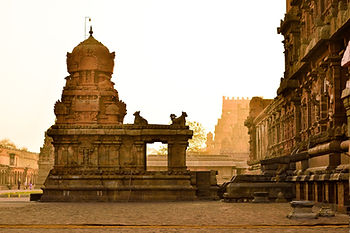
The Brihadeeswarar Temple in Thanjavur was completed in 1010 CE. Its 66-metre tower was capped with a single granite block weighing 80 tons, placed without machinery. The granite is not native to Thanjavur. No quarry within fifty kilometres has ever been identified. At noon, in any season, the shadow of the tower does not fall within the temple grounds.
Chettinad tells a different story. Between 1850 and 1950, a community of merchant bankers built up to 15,000 mansions furnished with Burmese teak, Italian marble, and Belgian glass — cargo from trading operations across Southeast Asia. The Japanese invasion of 1942 ended those operations abruptly. The families returned. Many mansions were abandoned. The contents never left.
Where You Stay: Heritage With Substance in Chettinad
The Bangala in Karaikudi set the template for the region when Mrs Meenakshi Meyyapan converted her family's clubhouse in 1999. It is better known for its kitchen than its architecture. The Chettinad cuisine served here is the most carefully preserved available to visitors.
Visalam in Kanadukathan, an Art Deco mansion operated by CGH Earth, sits at the centre of the village with the highest concentration of intact mansions in the region. The spatial logic of the original house is preserved. The surrounding streets require no itinerary.
How the Journey Unfolds

It begins where the 7th-century Shore Temple stands at the Bay of Bengal at first light, salt wind wearing the stone as it has for thirteen centuries. The right way to start: something ancient and indifferent to interpretation.
From there, the route moves south and inland through Thanjavur. Workshops, temples, a civilisation still being practised in specific rooms on specific streets. Then Chettinad, where the music drops away and the architecture takes over. Then Pondicherry, where a colonial canal still divides French urban planning from Tamil domestic life, and the journey closes at the coast with everything accumulated.
The Occasionist Lens
This is not a journey about Carnatic music the way a Tuscany trip is about wine. Musical literacy is not required. What it requires is willingness to enter a tradition on its own terms: to sit in a workshop, attend a temple concert with twenty other people, stand in front of a painting and understand what the gold leaf is actually doing.
This is the kind of journey The Occasionist Studio is designed to surface. Rather than presenting thousands of options, the Studio identifies a small number of journeys aligned with how you want to travel.
Planning This Journey
November through February is the right window. The Chennai Margazhi Music Season peaks mid-December to mid-January with thousands of concerts across the city. The Thyagaraja Aradhana falls in mid-January, its exact date shifting with the lunar calendar. Aligning with either requires planning several months ahead.
Access to the veena workshops and unconverted Chettinad mansions requires advance arrangement. These are not tourist attractions. A competent local expert is not optional. It is how the journey functions.
Explore the full journey inside The Occasionist Studio.
Frequently Asked Questions
Do I need to know Carnatic music before going?
No. Cultural curiosity is the only prerequisite.
When is the Thyagaraja Aradhana?
Mid-January, exact date shifting annually with the lunar calendar. In 2026 it fell on January 7th. Confirm the date through a local contact and book the Thanjavur segment at least six months ahead.
How do I access the veena workshops and Chettinad mansions?
Prior arrangement through a specialist. Neither has tourist infrastructure. Both are private homes or privately owned properties visited through local contacts.
What separates a genuine Tanjore painting from a reproduction?
Authentic works use 22-carat gold leaf, hand-carved chalk relief, and natural pigments on wood panels. Commercial versions substitute synthetic foil on plywood. The difference is visible in person within thirty seconds.
Explore The Occasionist Studio
Inquire about planning
Subscribe to the newsletter at the bottom of the page
Life is Now. Make it Count.


